
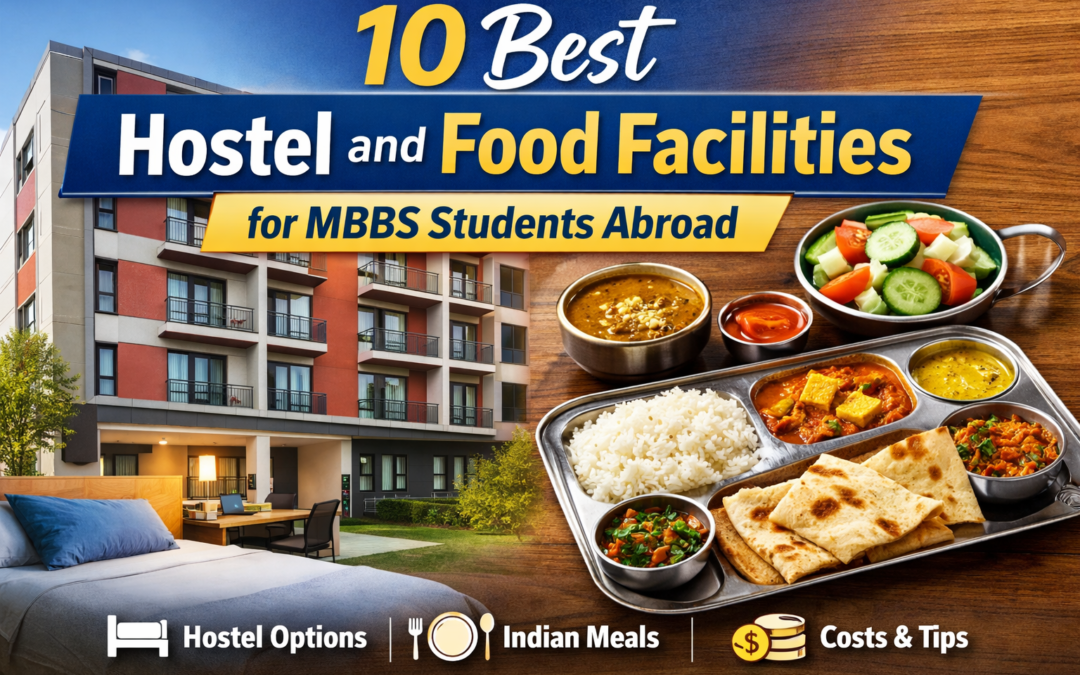
Hostel and Food Facilities for MBBS students abroad vary by country and university, but most medical colleges provide safe accommodation, basic amenities, and access to Indian or international food options. Students can choose between university hostels, private housing, and self-cooking. Understanding these facilities helps students live comfortably and focus on their studies without stress.
Contents
- 1 Introduction to Hostel and Food Facilities for MBBS Students Abroad
- 2 Types of Hostel Facilities for MBBS Students Abroad
- 3 Facilities Provided in MBBS Hostels
- 4 Food Facilities for MBBS Students Abroad
- 5 Cost of Hostel and Food Facilities
- 6 Country-Wise Overview of Hostel and Food Facilities
- 7 How to Choose the Right Hostel
- 8 Common Problems Students Face
- 9 Practical Tips for Students
- 10 Advantages of Good Hostel and Food Facilities
- 11 How Hostel Life Helps MBBS Students
- 12 Future Trends in Hostel and Food Facilities
- 13 FAQs
- 13.1 1. Are hostel facilities compulsory for MBBS students abroad?
- 13.2 2. Is Indian food available for MBBS students abroad?
- 13.3 3. How much does hostel cost for MBBS abroad?
- 13.4 4. Can students cook their own food?
- 13.5 5. Is it safe to stay in university hostels abroad?
- 13.6 6. What food options are available for vegetarians?
- 13.7 7. Do hostels provide Wi-Fi and other facilities?
- 13.8 8. Can students change their accommodation later?
- 13.9 9. What should I carry for hostel life abroad?
- 13.10 10. Is food included in hostel fees?
- 13.11 11. How can I manage food expenses abroad?
- 13.12 12. Are hostels heated in cold countries?
- 13.13 13. Can parents visit hostel rooms?
- 13.14 14. What if I don’t like the hostel food?
- 13.15 15. How do I choose the best hostel?
Introduction to Hostel and Food Facilities for MBBS Students Abroad
When students plan to study MBBS abroad, one of the biggest concerns is where they will stay and what they will eat. Good Hostel and Food Facilities are very important for comfort, health, and focus.
A student who feels safe and eats well can study better. So, before choosing a university, it is important to understand:
-
What kind of hostel is provided
-
Whether food suits your taste
-
How much it costs
-
What alternatives are available
This guide will help you understand everything step by step.
Types of Hostel Facilities for MBBS Students Abroad
Different universities offer different types of accommodation. Let’s break them down.
1. University Hostels
Most medical universities provide on-campus or nearby hostels.
Key Features:
-
Located within or near campus
-
Fully furnished rooms
-
Security and CCTV
-
Separate hostels for boys and girls
-
Wi-Fi and study areas
Room Types:
-
Single room
-
Double sharing
-
Triple sharing
University hostels are the most preferred option for first-year students.
2. Private Hostels
Some students choose private hostels outside campus.
Benefits:
-
More freedom
-
Better facilities (in some cases)
-
Flexible rules
Drawbacks:
-
Higher cost
-
Travel required
-
Safety depends on location
3. Shared Apartments
Senior students often move to shared flats.
Why students choose this:
-
Lower cost when shared
-
More independence
-
Option to cook your own food
Things to consider:
-
Rent agreements
-
Utility bills
-
Distance from college
Facilities Provided in MBBS Hostels
Understanding what you get in a hostel is important.
Basic Facilities
Most hostels provide:
-
Bed, mattress, pillow
-
Study table and chair
-
Wardrobe
-
Heating or cooling system
-
Attached or common bathroom
Safety and Security
Safety is a top priority for international students.
Common security features include:
-
24/7 security guards
-
CCTV surveillance
-
Biometric or ID access
-
Separate hostels for male and female students
Additional Amenities
Some hostels also offer:
-
Laundry services
-
Common kitchen
-
Gym or sports area
-
Recreation rooms
-
Medical support
Food Facilities for MBBS Students Abroad
Food is one of the biggest concerns for Indian students going abroad.
Types of Food Options Available
Students usually have the following choices:
1. University Mess
-
Fixed menu
-
Affordable
-
Includes breakfast, lunch, and dinner
Some universities provide Indian food or have Indian cooks.
2. Indian Mess or Tiffin Services
In popular MBBS destinations, Indian food is easily available.
Common items:
-
Rice
-
Chapati
-
Dal
-
Curry
-
Pickles
This is the most preferred option for Indian students.
3. Local Food
Students can also try local cuisine.
Benefits:
-
Affordable
-
Easily available
Challenges:
-
Taste difference
-
Spice level
-
Dietary restrictions
4. Self-Cooking
Many students prefer cooking their own meals.
Advantages:
-
Healthy
-
Cost-effective
-
Customizable
Requirements:
-
Kitchen access
-
Grocery stores nearby
Cost of Hostel and Food Facilities
Cost varies depending on the country and university.
Hostel Cost
-
University hostel: Affordable
-
Private hostel: Medium to high cost
-
Shared apartment: Cost divided among students
Food Cost
-
University mess: Budget-friendly
-
Indian mess: Slightly higher
-
Self-cooking: Most economical
Tips to Manage Costs
-
Choose shared rooms
-
Cook your own food
-
Buy groceries in bulk
-
Avoid eating out frequently
Country-Wise Overview of Hostel and Food Facilities
Different countries offer different experiences.
Russia
-
Affordable hostels
-
Indian food widely available
-
Good heating systems
Philippines
-
Hostel or apartment options
-
Indian mess available
-
Tropical climate, no heating needed
Georgia
-
Modern hostels
-
Many Indian restaurants
-
Students prefer shared apartments
Kazakhstan
-
Low-cost hostels
-
Indian food easily available
-
Comfortable living conditions
Kyrgyzstan
-
Budget-friendly hostels
-
Indian mess available
-
Simple but functional facilities
How to Choose the Right Hostel
Choosing the right accommodation is very important.
Things to Check
-
Distance from college
-
Safety and security
-
Room condition
-
Availability of food
-
Cost
Questions to Ask Before Booking
-
Is the hostel inside campus?
-
Is Indian food available?
-
What facilities are included?
-
Are utilities included in rent?
-
How many students share a room?
Common Problems Students Face
Even good hostels can have challenges.
1. Food Adjustment Issues
-
Taste differences
-
Lack of spices
-
Limited vegetarian options
2. Room Sharing Issues
-
Different habits
-
Noise
-
Cleanliness
3. Weather Conditions
-
Extreme cold in some countries
-
Need for heating systems
4. Homesickness
-
Missing home food
-
Cultural differences
Practical Tips for Students
Here are some useful tips based on real student experiences.
Before You Go
-
Learn basic cooking
-
Carry ready-to-eat food
-
Check hostel reviews
After You Arrive
-
Explore food options nearby
-
Build a routine
-
Connect with seniors
Daily Life Tips
-
Keep your room clean
-
Manage expenses
-
Stay connected with family
Advantages of Good Hostel and Food Facilities
Good Hostel and Food Facilities can make a big difference.
Benefits
-
Better focus on studies
-
Good health
-
Reduced stress
-
Safe living environment
How Hostel Life Helps MBBS Students
Living in a hostel teaches many life skills.
Skills You Learn
-
Independence
-
Time management
-
Social skills
-
Responsibility
Future Trends in Hostel and Food Facilities
Medical universities are improving facilities every year.
What to Expect
-
Better rooms
-
More food options
-
Indian chefs in mess
-
Smart security systems
FAQs
1. Are hostel facilities compulsory for MBBS students abroad?
No, hostels are not compulsory. Students can choose private accommodation or shared apartments based on their preference and budget.
2. Is Indian food available for MBBS students abroad?
Yes, in most popular MBBS destinations, Indian food is easily available through university mess or private Indian mess services.
3. How much does hostel cost for MBBS abroad?
Hostel costs vary by country and university, but they are generally affordable compared to private accommodation.
4. Can students cook their own food?
Yes, many hostels and apartments provide kitchen facilities where students can cook their own meals.
5. Is it safe to stay in university hostels abroad?
Yes, university hostels are generally very safe with security systems like CCTV, guards, and access control.
6. What food options are available for vegetarians?
Vegetarian food is available in Indian mess and some university cafeterias. Students can also cook their own meals.
7. Do hostels provide Wi-Fi and other facilities?
Yes, most hostels provide Wi-Fi, laundry, study areas, and basic furniture.
8. Can students change their accommodation later?
Yes, students can move from hostel to private apartments after the first year if they prefer.
9. What should I carry for hostel life abroad?
Carry essentials like clothes, medicines, basic utensils, and some ready-to-eat food items.
10. Is food included in hostel fees?
In some universities, food is included. In others, students need to pay separately for mess or food services.
11. How can I manage food expenses abroad?
You can save money by cooking at home, choosing affordable mess options, and avoiding frequent eating out.
12. Are hostels heated in cold countries?
Yes, hostels in cold countries usually have central heating systems to keep rooms warm.
13. Can parents visit hostel rooms?
Rules vary by university. Some allow visitors during specific hours, while others have strict policies.
14. What if I don’t like the hostel food?
You can switch to Indian mess, cook your own food, or eat at nearby restaurants.
15. How do I choose the best hostel?
Choose based on safety, location, facilities, cost, and food availability. Always check reviews and talk to current students.
This complete guide on Hostel and Food Facilities for MBBS students abroad helps you make informed decisions and prepare for a comfortable student life.
Kindly do follow our Instagram page for more updates – Instagram